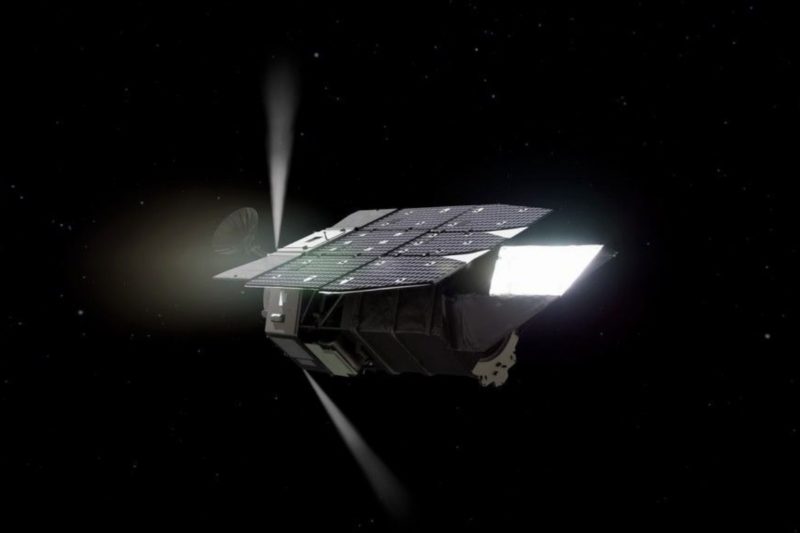
NASA’s Nancy Grace Roman Space Telescope (Roman) has recently completed a series of critical tests. The results demonstrate that the space observatory—currently in preparation—possesses the capability to maintain exceptional pointing stability during long-duration observations. According to the latest information released by NASA, the engineering team successfully tested the telescope’s “Fine Guidance System” between September 15 and 21, confirming that it can maintain a precise lock on a specific patch of the sky, meeting the rigorous stability standards required for scientific observation.
NASA explains that when the Roman Space Telescope conducts observations, its attitude control system first aligns the telescope with the target region of the sky. Subsequently, the Fine Guidance System tracks “guide stars,” relaying positional data approximately four times per second to make real-time adjustments for any minute drift.
The tests indicate that the telescope can maintain stability for about half an hour when using its Wide Field Instrument, and for up to eight hours when operating with its Coronagraph Instrument. NASA offers a vivid analogy: this level of stability is comparable to keeping a laser beam steadily focused on a U.S. dime from a distance of approximately 240 kilometers.
Coronagraph Instrument Receives First Light, Capturing Images of Stars in the Large Magellanic Cloud
Beyond the successful performance of the pointing system, another significant milestone occurred on September 22, when the Roman Space Telescope’s Coronagraph Instrument received its first light from the cosmos. The primary function of this instrument is to suppress the intense, blinding glare of stars, enabling scientists to observe the extremely faint planets and dust disks orbiting them.
During this initial test, the Coronagraph was pointed toward a faint star within the Large Magellanic Cloud, a neighboring galaxy. Although some test-related noise remains visible in the imagery, the results successfully confirm that the system is capable of producing focused, clear images. Subsequently, the team cooled the detector to a temperature better suited for observation and reoriented the telescope toward a different region of the Large Magellanic Cloud. They successfully captured an image featuring multiple stars, further verifying the telescope’s pointing accuracy and the performance of its instrumentation.
Testing an Innovative “Spectral Positioning” Guidance Technique
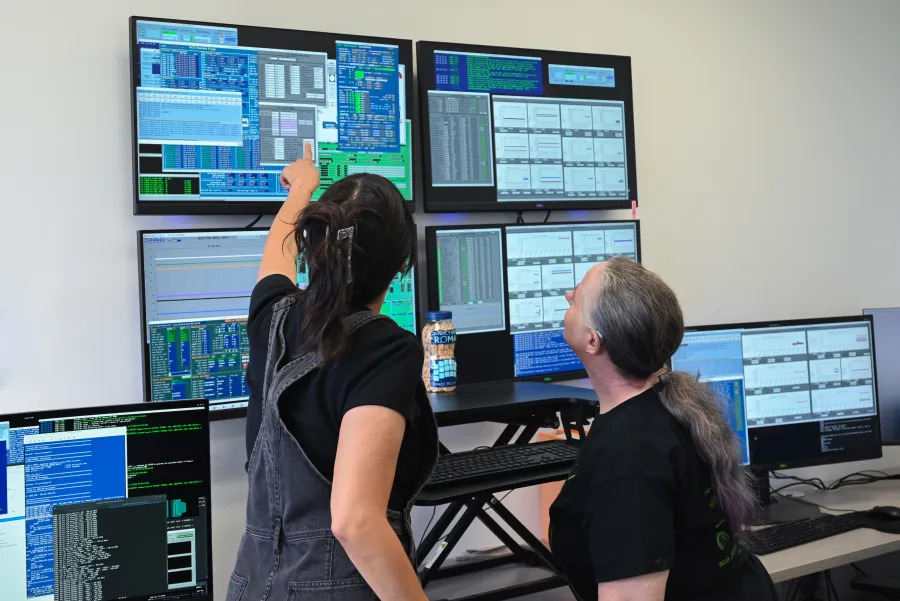
Moving forward, NASA and the development team will test a novel guidance method—never before used on other space telescopes—that relies on the “spectral” signatures of celestial objects for positioning, rather than simply tracking individual points of light (stars). If successfully validated, this new approach will enable the Roman Space Telescope to carry out its future scientific missions with even greater precision.
Overall, these achievements mark another step forward in the preparations for the Roman Space Telescope, bringing humanity closer to the goal of directly observing exoplanets.